
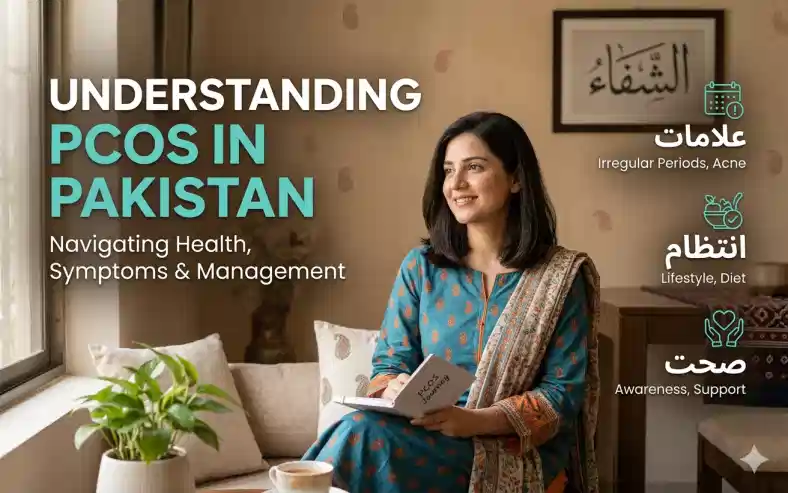
PCOS in Pakistan
Polycystic Ovary Syndrome (PCOS in Pakistan) is a common hormonal disorder that affects a significant number of women in Pakistan. While it can feel overwhelming, understanding the condition and making sustainable lifestyle changes can help manage symptoms effectively.
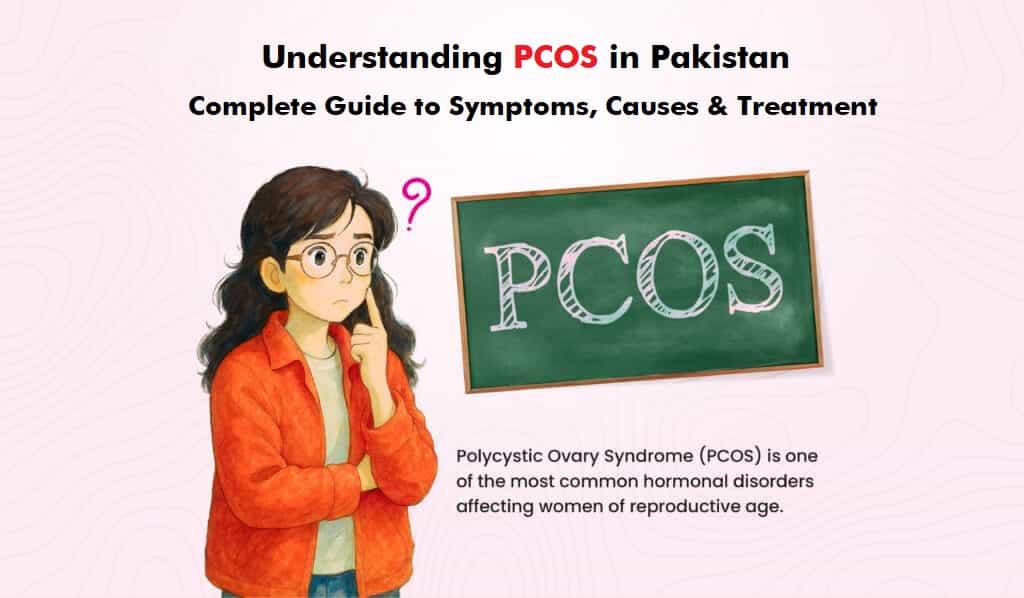
What is PCOS?
PCOS is a metabolic and reproductive disorder characterized by an imbalance of hormones. In Pakistan, sedentary lifestyles and diets high in refined carbohydrates have contributed to an increase in cases.
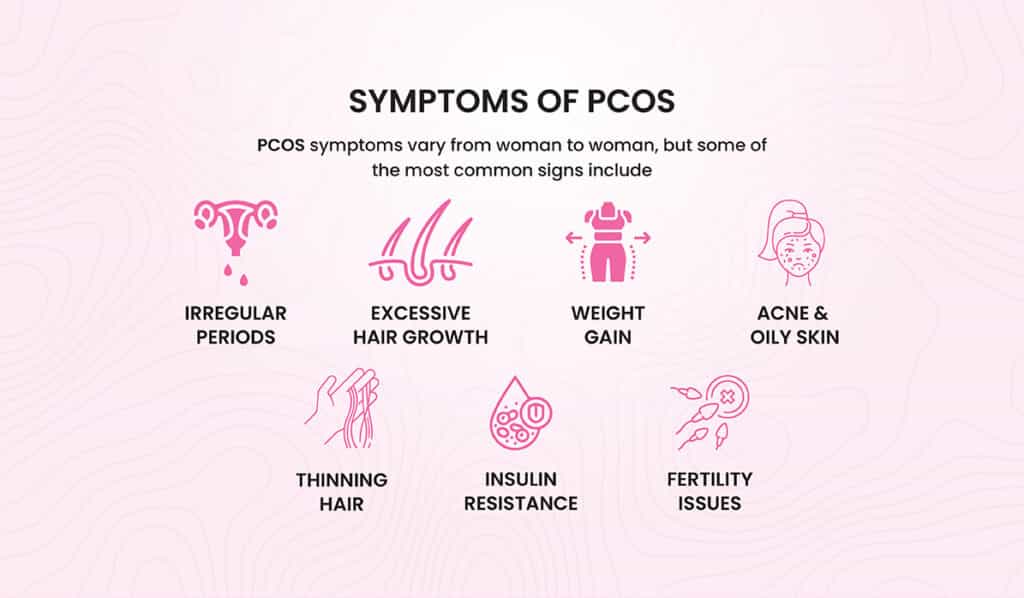
Common symptoms include:
-
Irregular menstrual cycles.
-
Excessive hair growth (hirsutism) on the face or body.
-
Persistent acne.
-
Weight gain, particularly around the abdomen.
-
Thinning hair on the scalp.
Why PCOS is Increasing in Pakistan
(Image Suggestion: Urban lifestyle, junk food, stress visuals)
Several factors are contributing to the rise of PCOS:
1. Unhealthy Diet
- High intake of processed foods and sugar
- Low fiber and nutrient intake
2. Sedentary Lifestyle
- Lack of physical activity
- Increased screen time
3. Stress & Mental Health
- Academic, social, and family pressure
4. Genetic Factors
- Family history increases risk
Research shows PCOS prevalence globally ranges from 6–20%, but can be higher in South Asian populations
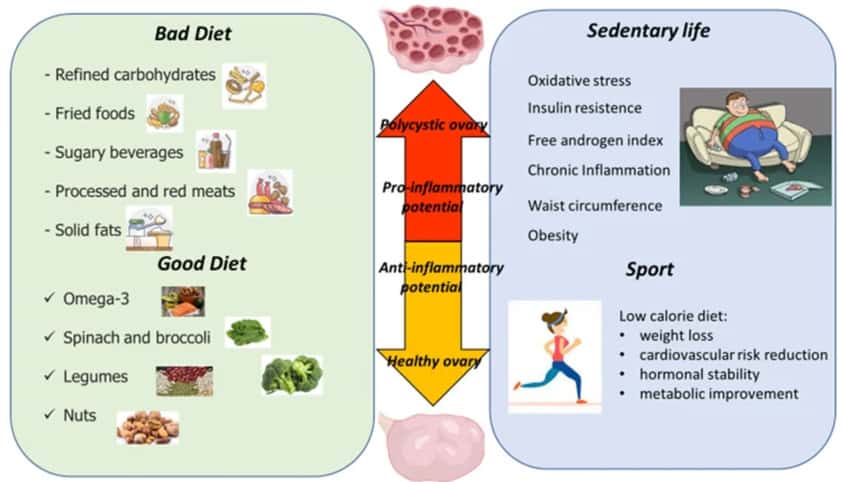
Dietary Adjustments for the Pakistani Table
Managing PCOS often starts in the kitchen. In a culture where oily curries and white bread are staples, small swaps can make a big difference:
-
Switch to Whole Grains: Replace white rice and “maida” (refined flour) roti with brown rice or “lal atta” (whole wheat flour).
-
Incorporate Local Proteins: Daal (lentils), chickpeas (cholay), and lean meats like chicken or fish are excellent for stabilizing blood sugar.
-
Healthy Fats: Use moderate amounts of olive oil or mustard oil instead of excessive ghee or vanaspati.
-
Mindful Snacks: Instead of samosas or biscuits, reach for a handful of walnuts or almonds.
Exercise and Lifestyle
Physical activity is crucial for improving insulin sensitivity. Given the local climate and urban environment, you might consider:
-
Morning or Evening Brisk Walks: Aim for 30 minutes in a local park.
-
Yoga at Home: There are many online resources tailored for PCOS that focus on hormonal balance.
-
Consistent Sleep: Aim for 7-8 hours of restful sleep to help regulate cortisol levels.
Seeking Professional Help
It is important to consult a healthcare professional for an accurate diagnosis and personalized treatment plan. In Pakistan, gynecologists and endocrinologists can provide guidance on medication or supplements that may be necessary alongside lifestyle changes.
Managing PCOS is a journey, not a sprint. By focusing on nourishing foods and consistent movement, many women successfully manage their symptoms and lead healthy, vibrant lives.
FAQs About PCOS in Pakistan
1. What is PCOS meaning in Urdu?
PCOS کو اردو میں پولی سسٹک اووری سنڈروم کہا جاتا ہے، جو خواتین میں ہارمونی عدم توازن اور بانجھ پن کا سبب بن سکتا ہے۔
2. What causes PCOS?
PCOS can be caused by a combination of:
- Hormonal imbalance
- Insulin resistance
- Genetic factors
- Unhealthy lifestyle (poor diet, lack of exercise, stress)
3. Can PCOS be cured?
There is no permanent cure for PCOS. However, it can be effectively managed with lifestyle changes, proper diet, and medical treatment.
4. How is PCOS treated in Pakistan?
Treatment options include:
- Healthy lifestyle changes
- Hormonal medications
- Insulin-regulating medicines (like metformin)
- Fertility treatments (if needed)
5. What diet is best for PCOS?
A healthy PCOS diet includes:
- Low sugar foods
- High fiber (vegetables, whole grains)
- Lean protein (chicken, fish, eggs)
- Healthy fats (nuts, olive oil)
Avoid processed foods and sugary drinks.
6. Is PCOS common in Pakistan?
Yes, PCOS is very common in Pakistan and is becoming more widespread due to lifestyle changes, stress, and lack of awareness.