What Are Irregular Periods? Causes, Symptoms & Treatments
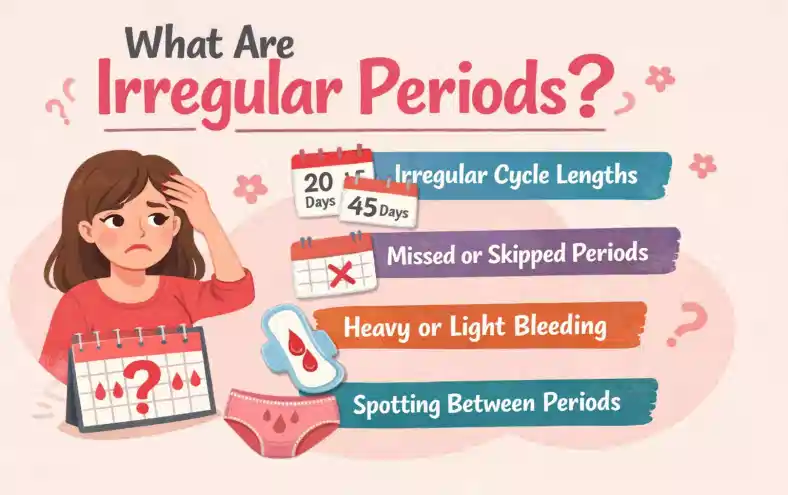
An irregular periods, also known as an irregular menstrual cycle, occurs when your monthly menstrual cycle deviates from the typical 28-day pattern. While a cycle can normally range from 21 to 35 days, cycles outside this range—or cycles that vary significantly month to month—may be considered irregular.
Understanding the causes and treatments of irregular periods is essential for maintaining reproductive and overall health.
What Are Irregular Periods?
Irregular periods refer to variations in:
- Cycle length – Some months your period may arrive early or late.
- Flow intensity – Periods may be unusually light or heavy.
- Duration – Menstrual bleeding may last longer or shorter than usual.
Common Causes of Irregular Periods
- Hormonal Imbalances
Hormones like estrogen and progesterone regulate the menstrual cycle. Imbalances can cause cycles to be irregular. - Polycystic Ovary Syndrome (PCOS)
A common condition that disrupts ovulation, often leading to irregular periods. - Stress and Lifestyle Factors
High stress, excessive exercise, or sudden weight changes can impact menstrual cycles. - Thyroid Disorders
Both hypothyroidism and hyperthyroidism can lead to irregular cycles. - Medications
Birth control pills, fertility drugs, or other hormonal treatments can affect cycle regularity.
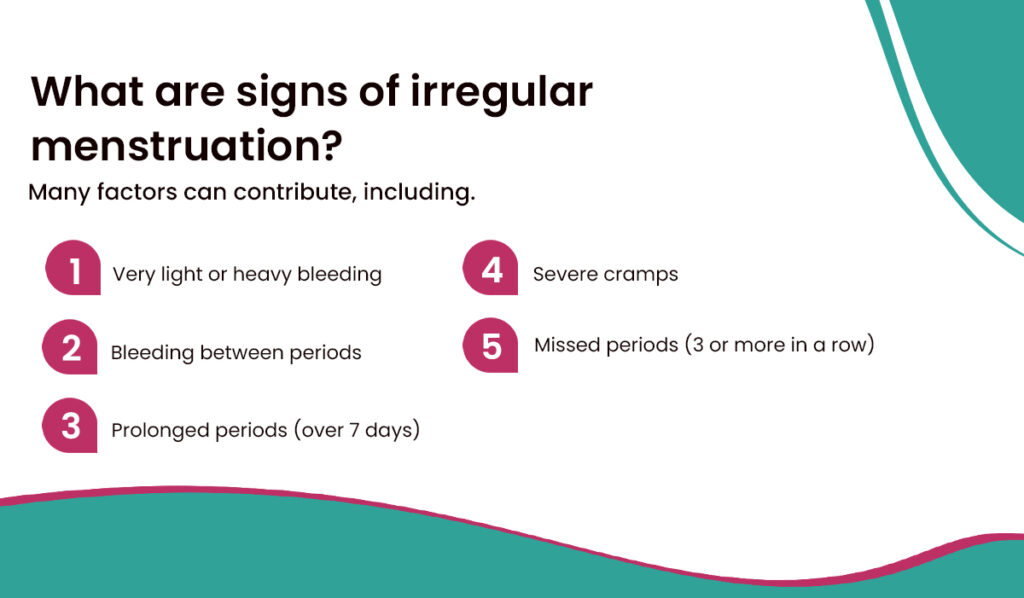
Symptoms of Irregular Periods
- Missed or delayed periods
- Spotting between periods
- Extremely heavy or light menstrual bleeding
- Severe cramps or abdominal pain
- Fatigue and mood changes
When to See a Doctor
Consult a healthcare provider if you experience:
- Cycles shorter than 21 days or longer than 35 days consistently
- Missed periods for several months
- Severe pain or excessive bleeding
- Signs of underlying conditions like PCOS or thyroid problems
Treatment Options
Treatment depends on the underlying cause:
- Lifestyle Changes: Regular exercise, balanced diet, stress management
- Medication: Hormonal therapy, birth control pills, or thyroid medications
- PCOS Management: Weight control, insulin therapy, and ovulation-inducing medications
- Regular Check-ups: Monitoring cycles and hormone levels
Preventing Irregular Periods
- Maintain a healthy weight
- Manage stress effectively
- Exercise moderately
- Track your cycles using apps or a calendar
- Avoid smoking and excessive alcohol
Frequently Asked Questions (FAQ) About Irregular Periods
1. What are irregular periods?
Irregular periods are menstrual cycles that do not follow a consistent pattern. This could mean cycles that are shorter than 21 days, longer than 35 days, skipped months, unusually heavy or light bleeding, or spotting between periods.
2. What causes irregular periods?
Common causes include:
- Hormonal imbalances (e.g., thyroid disorders, PCOS)
- Stress and lifestyle factors
- Sudden weight changes or eating disorders
- Certain medications, including birth control
- Perimenopause or menopause
- Chronic illnesses affecting reproductive health
3. How common are irregular periods?
Irregular periods are quite common, especially in teenagers and women approaching menopause. Many women experience occasional irregularities due to stress or lifestyle changes.
4. What are the symptoms of irregular periods?
Symptoms can vary but often include:
- Cycles that are shorter or longer than usual
- Missed or skipped periods
- Very light or very heavy bleeding
- Spotting between periods
- Severe cramps or discomfort
5. When should I see a doctor?
Seek medical advice if you experience:
- Bleeding lasting longer than 7 days
- Very heavy bleeding (soaking through pads/tampons in an hour)
- Missed periods for more than 3 months (if not pregnant)
- Severe pain during periods
- Sudden changes in your menstrual cycle
6. How are irregular periods diagnosed?
A doctor may recommend:
- Physical examination and medical history
- Blood tests to check hormones
- Ultrasound or imaging of reproductive organs
- Reviewing lifestyle factors and medications
7. Can irregular periods be treated?
Yes, treatment depends on the cause:
- Hormonal therapy or birth control pills for hormonal imbalances
- Lifestyle adjustments (diet, exercise, stress management)
- Treating underlying medical conditions such as thyroid disorders or PCOS
8. Can irregular periods affect fertility?
In some cases, yes. Irregular cycles may make ovulation unpredictable, affecting the chances of conception. Addressing the underlying cause often improves fertility.
9. Are irregular periods dangerous?
Usually, they are not immediately dangerous, but persistent irregularities could indicate underlying health issues that need treatment, such as hormonal disorders, uterine problems, or anemia from heavy bleeding.
10. How can I track my periods to notice irregularities?
- Use a period-tracking app or calendar
- Note start and end dates, flow intensity, and symptoms
- Share this information with your healthcare provider for accurate assessment